When the Wilderness Camp Pointed to the Cross
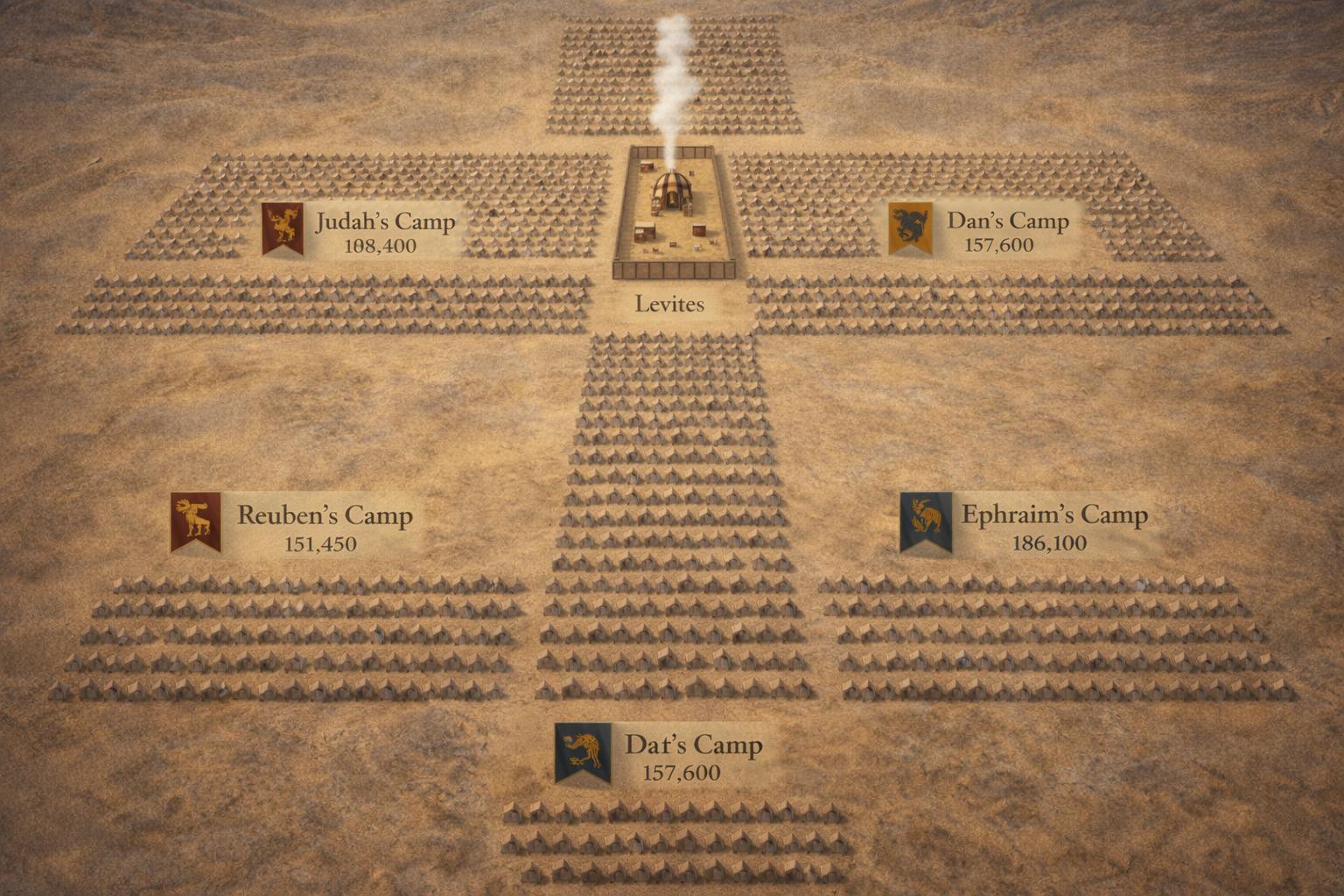
While reading through Exodus and Numbers, you might come across many detailed instructions about the Tabernacle, the priesthood, and even how the tribes of Israel were arranged around the camp. At first glance, these passages can seem like historical details or logistical instructions. But when we slow down and look carefully, something remarkable appears.
God was telling a story long before the events of the New Testament.
God at the Centre of His People
In the wilderness, the Tabernacle, the dwelling place of God, was placed at the very centre of the camp.
“Then have them make a sanctuary for me, and I will dwell among them.”
— Exodus 25:8
Around the Tabernacle were the Levites, who were responsible for serving in the sanctuary. Beyond them were the twelve tribes of Israel, arranged in four groups facing east, south, west, and north (Numbers 2).
This meant something profound: God’s presence was literally at the centre of the community. Every tribe lived with the constant reminder that the Lord was among them.
The Tribe at the Entrance
The entrance to the Tabernacle faced east. According to Numbers 2:3, the tribe camped on the east side, the side of the entrance, was Judah.
“On the east side, toward the sunrise, the divisions of the camp of Judah are to encamp under their standard.”
— Numbers 2:3
This means that anyone approaching the Tabernacle would first come through the side where the tribe of Judah was positioned.
Now here is where the story becomes even more powerful.
The Lion of Judah
In the New Testament, Jesus is described as coming from the tribe of Judah.
“See, the Lion of the tribe of Judah, the Root of David, has triumphed.”
— Revelation 5:5
Symbolically, this means something extraordinary: the way to approach God came through Judah.
Thousands of years later, Jesus, born from the tribe of Judah, would declare:
“I am the way and the truth and the life. No one comes to the Father except through me.”
— John 14:6
What we see in the wilderness camp is a beautiful foreshadowing. The arrangement of the tribes was not random. It pointed forward to the ultimate way people would come into God’s presence.
A Shadow of What Was to Come
The New Testament tells us that many elements of the Old Testament were shadows pointing toward Christ.
“The law is only a shadow of the good things that are coming.”
— Hebrews 10:1
The Tabernacle, the sacrifices, the priesthood, and even the way the camp was arranged all pointed forward to Jesus.
The sacrifices pointed to the ultimate sacrifice of Christ.
The high priest pointed to Jesus as our eternal High Priest.
The Tabernacle pointed to God dwelling among His people.
And even the entrance through Judah pointed to the One who would become the way to the Father.
Seeing the Bigger Picture
When we read Scripture carefully, we begin to see how deeply interconnected the Bible is. What appears in Exodus and Numbers finds its fulfilment in the Gospels and Revelation.
From the wilderness to the cross, God was revealing His plan of redemption.
And the message is as true today as it was then:
The way to God comes through Jesus, the Lion of the tribe of Judah.